

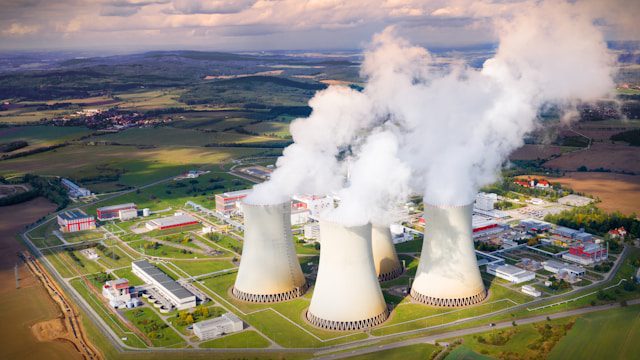
Upstate New York is quietly becoming one of the most important energy regions in the United States. Once defined by hydroelectric legacy infrastructure, aging industrial corridors, and population decline in certain areas, the region is now re-emerging as a strategic hub for next-generation energy development. At the center of this shift is a bold push by the state to develop at least one gigawatt-scale advanced nuclear power facility, a move that could reshape not only New York’s electric grid but also the economic future of its upstate communities.
Unlike previous energy transitions that focused primarily on renewables like wind and solar, this new phase is different: it is driven by the need for always-on, high-capacity, carbon-free baseload power – the kind of electricity required to support artificial intelligence infrastructure, semiconductor manufacturing, and electrified industrial expansion.
Upstate New York, with its existing nuclear expertise, transmission corridors, and industrial land availability, is now positioned at the center of that transformation.
A Region Already Built on Large-Scale Power
To understand why Upstate New York is being considered for gigawatt-scale nuclear expansion, it is important to recognize what already exists there.
The region is home to one of the most significant nuclear footprints in the country, including the Nine Mile Point, Ginna, and FitzPatrick nuclear stations near Lake Ontario. These facilities already supply a substantial share of the state’s carbon-free electricity and serve as proof that large-scale nuclear operations can function reliably in the region.
In fact, Upstate New York has long been an energy exporter to the rest of the state. Hydroelectric generation from the Niagara region and nuclear power along Lake Ontario have historically flowed downstate to support the dense urban and industrial demand of New York City and surrounding areas.
What is changing now is not the concept of Upstate as an energy producer but the scale and ambition of what it is expected to produce.
Why Size Matters
The proposed nuclear initiative centers on a facility or cluster of reactors capable of producing at least 1 gigawatt of electricity. That level of output is not arbitrary. In modern grid planning, one gigawatt represents roughly the power needed to supply around one million homes, or to support large industrial clusters such as data centers, manufacturing plants, and electrified transportation hubs.
What makes this requirement significant is not just the scale, but the demand profile driving it.
Upstate New York, like much of the Northeast, is experiencing a structural shift in electricity consumption:
- Rapid expansion of AI and data center infrastructure
- Electrification of transportation and heating
- Reshoring of industrial manufacturing
- Retirement of fossil fuel generation assets
- Increasing grid reliability constraints during peak winter demand
These forces are colliding at a time when renewable energy expansion, while rapid, still struggles with intermittency and transmission bottlenecks. Nuclear energy, by contrast, offers continuous output independent of weather conditions.
That is why policymakers are now prioritizing gigawatt-scale nuclear as a stabilizing force in the regional energy mix.
Why Upstate New York Specifically?
Several structural advantages make Upstate New York uniquely positioned for nuclear expansion.
Existing Nuclear Infrastructure and Expertise
Unlike regions that would need to build nuclear capability from scratch, Upstate New York already has decades of operational experience. The workforce, regulatory familiarity, and supply chain knowledge are already embedded in the region.
This significantly reduces one of the biggest barriers to nuclear development: human capital.
Land Availability and Lower Population Density
Large-scale nuclear projects require substantial land buffers, safety zones, and transmission access. Upstate New York offers relatively spacious industrial and semi-rural zones compared to downstate regions.
This makes siting more feasible in counties along Lake Ontario, the Finger Lakes region, and parts of Western and Central New York.
Transmission Connectivity
One of the most underappreciated advantages of Upstate New York is its role in the broader Northeastern grid. Power generated in the region can be transmitted through high-voltage lines toward population centers.
However, this also exposes a challenge: transmission bottlenecks, particularly through the Hudson Valley corridor, which can limit how efficiently upstate generation serves downstate demand.
Addressing this constraint will likely be as important as building the nuclear facility itself.
Jobs, Industry, and Regional Revitalization
For many upstate communities, nuclear development is an economic story.
Large nuclear projects typically create:
- Thousands of construction jobs during buildout
- Hundreds to over a thousand long-term operational jobs
- Secondary economic effects across manufacturing, logistics, and services
More importantly, nuclear development can anchor long-term industrial activity. Unlike short-cycle infrastructure investments, nuclear plants operate for decades, often 60 years or more, creating stable economic ecosystems around them.
In regions that have experienced decades of industrial decline, this stability is a major policy driver.
There is also a growing connection between nuclear energy and high-tech industry attraction. Data centers, semiconductor fabrication, and AI compute clusters all require dense, reliable electricity supply. Upstate New York is now competing nationally for these industries, and nuclear energy is becoming a key differentiator.
Building the Next Generation of Nuclear Talent
One of the most critical challenges facing the initiative is workforce development.
Building a gigawatt-scale nuclear facility requires specialized labor across multiple domains:
- Nuclear engineering and reactor operations
- Welding and precision fabrication
- Electrical grid integration
- Radiation safety and regulatory compliance
- Construction project management at extreme scale
Upstate New York is responding to this need with targeted workforce training funding, aiming to rebuild nuclear-skilled labor pipelines that have diminished since the industry’s slowdown in the late 20th century.
This is not simply a technical requirement, it is a regional transformation effort. Community colleges, trade schools, and engineering programs are becoming central players in energy policy.
Competing Visions: Nuclear vs. Renewable-Only Strategies
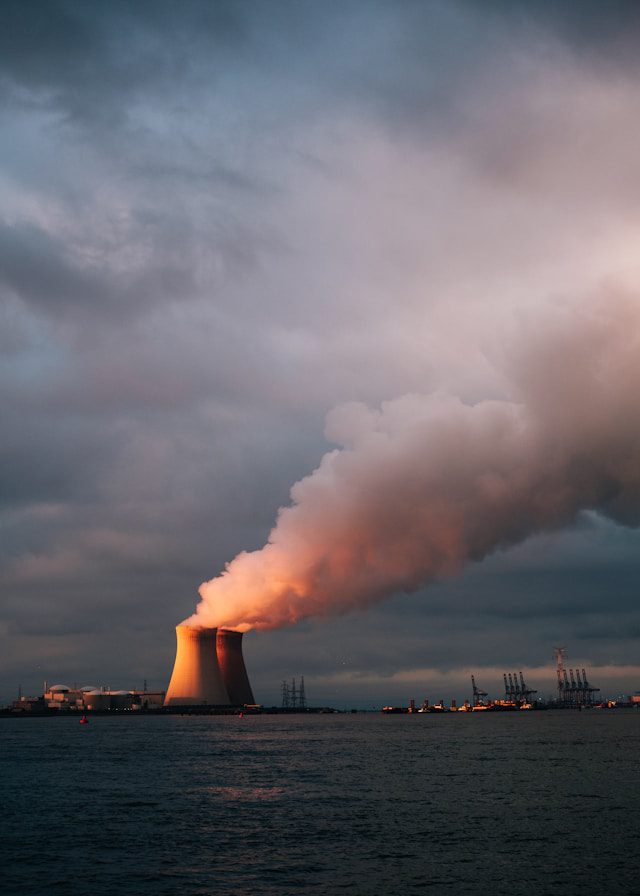
The push for nuclear expansion in Upstate New York does not exist in isolation. It is part of a broader debate about how to decarbonize the grid.
One vision emphasizes a predominantly renewable system powered by wind, solar, and battery storage. Another argues for a hybrid model where nuclear provides the stable backbone, while renewables supply flexible and distributed generation.
Upstate New York sits at the intersection of both strategies:
- It already hosts significant hydroelectric capacity
- It has strong wind development potential in certain regions
- It has legacy nuclear infrastructure
- And it now faces rapidly increasing demand from electrification and digital infrastructure
This combination makes it a testing ground for what a “balanced” clean energy system might look like in practice.
A Long Road Ahead
Despite momentum, the nuclear project remains in an early development phase. Key decisions, such as reactor technology, exact location, financing structure, and developer selection are still unresolved.
Even under optimistic timelines, large nuclear projects typically take a decade or more from planning to operation. That means the Upstate New York project is unlikely to materially impact electricity supply in the short term.
However, its strategic importance lies not in immediate output, but in signaling and long-range planning.
It represents a shift in how the state thinks about energy: from reactive grid management to proactive capacity building.
Upstate New York as an Energy Powerhouse in Transition
Upstate New York is entering a new energy era defined by scale, complexity, and long-term infrastructure planning. The proposed gigawatt-scale nuclear project is more than a single facility, it is a signal that the region is being repositioned as a core pillar of the Northeast’s energy future.
If successful, it could help stabilize electricity prices, attract high-value industries, rebuild industrial employment, and reinforce grid reliability across the state. But it also comes with significant challenges, including cost, permitting complexity, workforce readiness, and infrastructure constraints.
What is clear, however, is that Upstate New York is no longer just a passive supplier of hydro and legacy nuclear power. It is becoming a strategic battleground for the next generation of American energy systems where nuclear, renewables, and industrial demand converge into a single defining question:
How do you power the future economy reliably, cleanly, and at scale?
