

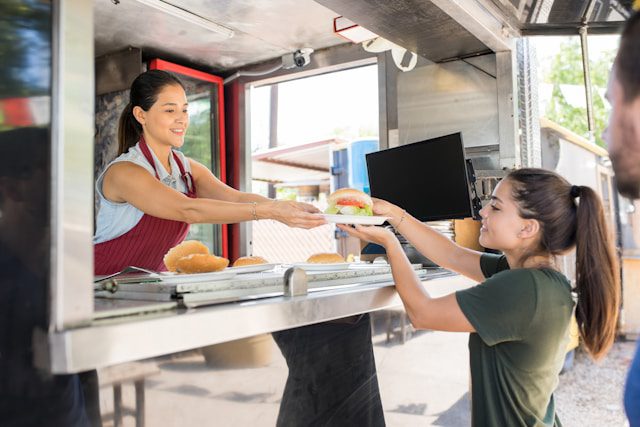
Mobile food businesses have become one of the most visible examples of modern entrepreneurship reshaping local upstate economies. Throughout New York, food trucks and mobile kitchens are giving owners an alternative to traditional brick-and-mortar restaurants, offering lower overhead, flexible operating models, and the ability to build a brand directly in front of customers.
While once considered a risky offshoot of the restaurant industry, the food truck model has matured into a serious business strategy. For many operators, it represents not just a way to sell food, but a way to design a lifestyle around independence, mobility, and direct customer engagement.
At the same time, the model is not without challenges. Success often depends on more than just a good menu. Location strategy, regulatory compliance, marketing discipline, and operational consistency all play a role in whether a mobile food venture thrives or struggles to gain traction.
Why Food Trucks Continue to Attract Entrepreneurs
One of the biggest draws of the food truck industry is the relatively low barrier to entry compared to opening a restaurant. Traditional restaurants require long-term leases, buildouts, staffing commitments, and high fixed costs before the first customer ever walks through the door.
Mobile food businesses change that equation. Owners can start with:
- A single vehicle or trailer
- Limited initial staffing
- Flexible location choices
- Lower upfront capital investment than a storefront
This flexibility allows entrepreneurs to test concepts in real time. Instead of investing heavily in a fixed location, they can experiment with menus, pricing, and customer response across different environments.
However, that flexibility comes with a tradeoff: revenue is not guaranteed by location alone. A food truck is not automatically successful just because it is mobile. In fact, many operators discover that mobility introduces a new layer of complexity around visibility, consistency, and customer loyalty.
The Shift From Mobility to Strategy
Over time, many food truck owners transition from constant movement to more stable operating patterns. While the traditional image of a food truck involves chasing festivals and high-traffic events, the modern reality is more nuanced.
Some of the most successful operators focus on:
- Semi-permanent locations
- Repeat customer bases
- Predictable schedules
- Social media-driven awareness
This shift reflects an important evolution in the industry. Rather than relying solely on foot traffic, food truck operators increasingly treat their business like a hybrid between a restaurant and a retail brand.
In some cases, staying in one location long-term can outperform constant relocation. Customers value predictability, and familiarity often leads to repeat business. A consistent presence in a community can gradually turn a mobile unit into a neighborhood staple.
What Separates Successful Food Trucks From Struggling Ones
Industry experience and case studies consistently point to a few key success factors that determine whether a food truck thrives:
Location Strategy
Location is still one of the most important variables, but not in the simplistic sense of “busy vs. empty.” Successful operators often prioritize:
- Consistent traffic patterns over peak spikes
- Communities with limited dining options
- Proximity to workplaces, schools, or residential zones
- Visibility that builds familiarity over time
A high-traffic festival may generate short-term revenue, but a stable weekday location can build long-term sustainability.
Menu Design and Simplicity
Food trucks that succeed long-term often focus on:
- Narrow, well-executed menus
- Fast preparation times
- High-margin signature items
- Repeatable consistency
Overly complex menus tend to slow service and increase operational strain. Simplicity allows for speed, consistency, and better cost control.
Branding and Customer Experience
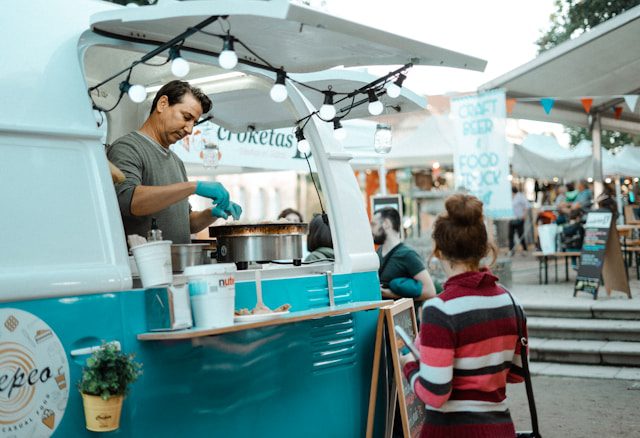
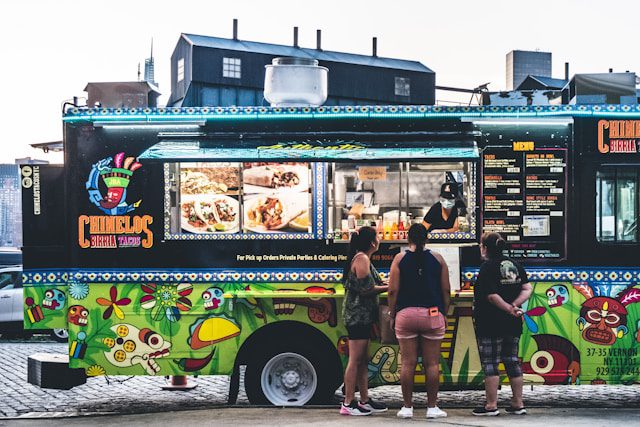
In mobile food service, branding is essential. Without a fixed storefront, the truck itself becomes the brand identity.
Successful operators invest in:
- Clear visual design and signage
- Strong social media presence
- Customer engagement at the point of sale
- Consistent messaging across platforms
Customer experience also plays a major role. Friendly service, reliability, and consistency often matter as much as the food itself.
The Reality of Entrepreneurship on Wheels
While food trucks are often romanticized as symbols of freedom, the reality is more demanding than it appears. Operators must juggle multiple responsibilities at once:
- Daily setup and breakdown
- Supply chain management
- Weather-dependent revenue swings
- Local permit compliance
- Mechanical maintenance of the vehicle itself
Unlike traditional restaurants, a breakdown in any one system can halt operations entirely. A vehicle issue, for example, can eliminate revenue for days or weeks.
This volatility is one reason many operators eventually stabilize their operations into fixed or semi-fixed locations.
The Growing Trend Toward Hybrid Models
One of the most notable shifts in the industry is the rise of hybrid food truck models. These businesses blend elements of mobility and permanence.
Common hybrid approaches include:
- Operating a truck at a fixed parking lot location
- Using a truck as a catering extension of a restaurant brand
- Rotating between a few consistent weekly stops
- Expanding into brick-and-mortar locations after building a customer base
This hybrid structure allows owners to retain flexibility while reducing unpredictability.
It also reflects a broader trend in small business strategy: reducing risk by combining multiple revenue channels rather than relying on a single operating model.
Community Demand and Local Food Culture
Food trucks often succeed when they fill a gap in local food ecosystems. In many mid-sized cities and smaller communities, mobile food vendors provide:
- Affordable dining options
- Cultural or niche cuisine not widely available locally
- Convenient meals for workers and commuters
- Social gathering points in public spaces
In this way, food trucks become more than businesses – they become part of community infrastructure. Regular customers often form personal relationships with owners, reinforcing loyalty and repeat visits.
Economic Pressure and Adaptation
Like many small businesses, food trucks are sensitive to broader economic conditions. Rising ingredient costs, fuel prices, and local regulations can all impact profitability.
As a result, operators increasingly adapt by:
- Adjusting menus to seasonal pricing
- Increasing average order value through combo offerings
- Limiting operating days to maximize profitable hours
- Expanding into catering and private events
This adaptability is one of the defining strengths of mobile food businesses. The ability to pivot quickly allows owners to respond to changing market conditions in ways traditional restaurants often cannot.
The Future of Mobile Food Entrepreneurship
The food truck industry is no longer just a stepping stone into restaurant ownership. For many entrepreneurs, it has become a long-term business model in its own right.
Future growth is likely to be shaped by:
- Increased regulation in urban markets
- Expansion of food truck-focused developments and parks
- Integration with digital ordering systems
- Greater emphasis on branding and experience-driven dining
As consumer preferences continue to shift toward convenience, experience, and affordability, mobile food businesses are positioned to remain a key part of the food economy.
What is changing is not whether food trucks are viable, but how they operate. The most successful operators are those who move beyond the idea of constant mobility and instead focus on building structured, repeatable systems that support long-term sustainability.
In many ways, the food truck is no longer just a vehicle for food. It is a platform for entrepreneurship, experimentation, and community connection – one that continues to evolve with every generation of business owners who step behind the window.
