

Choosing a college is rarely a decision made from brochures alone. For many students and families, the process includes long drives, stopping in multiple towns, walking campuses, and trying to understand what daily life might actually feel like in each place. These road trips often become just as important as the campus tours themselves, offering a practical look at academic environments, surrounding communities, and regional culture.
New York State presents a particularly diverse landscape for prospective students. Within a few hours of driving, visitors can move from major metropolitan campuses in New York City to suburban university hubs, and then into small, scenic college towns surrounded by lakes, farmland, and forested hills. This variety makes the state an ideal setting for structured college road trips that combine education research with regional exploration.
Why College Road Trips Matter in the Decision Process
For students weighing multiple acceptances or building a shortlist, visiting campuses in person provides context that virtual tours often cannot fully replicate. Academic reputation, program strength, and financial aid packages are essential considerations, but environment plays a significant role in student satisfaction and mental health.
Road trips allow families to observe everyday conditions: walkability, housing options, dining availability, transportation access, and general atmosphere. A campus that looks appealing online may feel very different when experienced in person, particularly in terms of size, energy level, and surrounding community.
In New York State, this variation is especially pronounced. A single trip can include very different environments, urban campuses with dense transit networks, mid-sized cities with historic downtowns, and rural institutions where the campus is the central hub of activity.
New York City: Dense Academic Hubs and Urban Energy
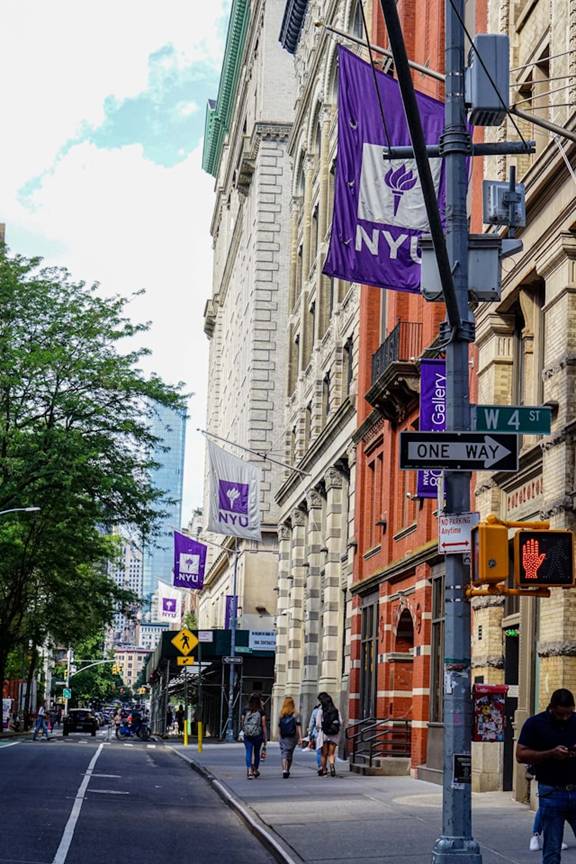
A college road trip in New York State often begins in New York City, home to some of the country’s largest and most recognizable universities. Institutions such as Columbia University and New York University sit within dense urban neighborhoods where campus boundaries blend into the surrounding city.
Visiting these schools offers a unique perspective on how students interact with a global metropolitan environment. Rather than traditional enclosed campuses, students often move between academic buildings, public transit, internships, and cultural institutions throughout the day. For some, this level of access to professional and cultural opportunities is a defining advantage.
However, the urban setting also requires adjustment. Space is limited, housing is often competitive, and campus life is more decentralized compared to traditional residential colleges. For families on a road trip, the experience of navigating traffic, parking, and pedestrian-heavy areas becomes part of understanding what student life may look like.
Upstate College Cities: Balanced Academic Environments
Traveling north from New York City, college road trips often transition into mid-sized cities that offer a balance between academic focus and community life. Cities such as Albany, Syracuse, and Buffalo host major public universities and private institutions that serve as economic and cultural anchors for their regions.
The State University of New York at Albany (University at Albany, SUNY), Syracuse University, and University at Buffalo each reflect different versions of the mid-sized college experience. These campuses tend to be more contained than urban universities, with distinct residential zones, athletic facilities, and academic buildings clustered together.
For visiting families, these cities often provide a clearer sense of campus identity. Parking is generally easier, campus tours are more centralized, and students are more likely to live within a defined radius of the university. At the same time, each city offers its own downtown district, giving students access to restaurants, entertainment, and internships without the intensity of New York City.
Road trips through these areas also highlight seasonal variation. Winter conditions can be significant in upstate regions, influencing everything from commuting patterns to campus activities. Visiting during different times of year can offer very different impressions of the same university.
Finger Lakes Region: Scenic Campuses and Smaller Communities
One of the most distinctive areas for college exploration in New York State is the Finger Lakes region. Known for its lakes, vineyards, and rolling hills, this area is home to a range of smaller colleges and universities that emphasize close-knit campus communities.
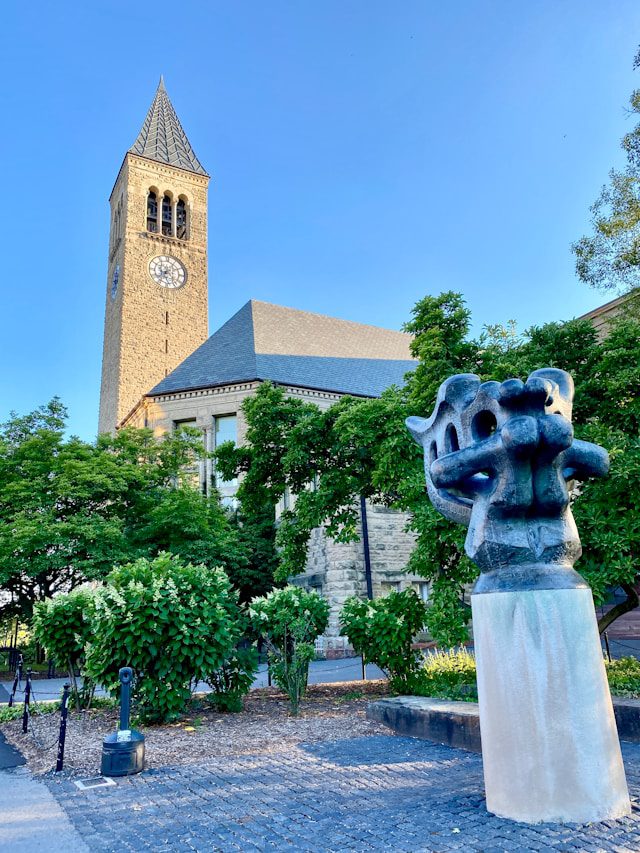
Institutions such as Cornell University in Ithaca, Ithaca College, and Hobart and William Smith Colleges in Geneva provide strong academic programs in settings that are more intimate than large urban campuses. Road trips through this region often involve winding drives between towns, with campuses set against natural landscapes that influence student life in noticeable ways.
In Ithaca, for example, steep hills and gorges shape daily movement between campus and downtown. In Geneva, proximity to Seneca Lake creates a quieter environment with strong connections to outdoor recreation. These geographic features are not just scenic backdrops, they directly affect transportation, housing locations, and student routines.
For families on college tours, the Finger Lakes region often stands out for its pace. Towns are smaller, distances are shorter, and campuses tend to feel more self-contained. This can appeal to students seeking a more focused academic environment without the distractions of larger cities.
Hudson Valley and Suburban College Settings
The Hudson Valley region offers a different type of college experience. Schools such as Vassar College in Poughkeepsie and SUNY New Paltz are located in towns that blend suburban accessibility with scenic surroundings.
These campuses are often popular among students seeking a balance between independence and accessibility to major metropolitan areas. Road trips through the Hudson Valley typically include a mix of highway driving and scenic routes along the Hudson River, offering a transition zone between urban and rural New York.
The surrounding communities play an important role in shaping student life. Local downtown areas often serve as extensions of campus activity, and weekend travel to New York City is relatively feasible compared to upstate locations. This combination of proximity and separation makes the region particularly attractive for students who want access to city opportunities without living directly in an urban environment.
Planning an Effective College Road Trip
A successful college road trip in New York State often involves more than simply visiting campuses. Because distances between regions can be significant, planning routes efficiently is important. Families often group schools by geography, such as combining Finger Lakes colleges in one trip or pairing Hudson Valley schools with New York City visits.
Time management is also essential. Campus tours, admissions sessions, and informal walks through surrounding neighborhoods can easily fill an entire day per school. Allowing time for unstructured exploration can be just as valuable as scheduled events, as it provides insight into student life outside formal presentations.
Seasonal timing also matters. Visiting in fall or spring can showcase campuses at their most active, while winter visits in upstate regions may highlight weather challenges that affect daily routines. Each season provides different information that can influence decision-making.
Key Considerations for Students and Families
While academic programs remain the central factor in college selection, road trips reveal additional dimensions that often influence final choices. These include transportation access, campus layout, housing availability, and the surrounding community’s character.
Students may find that they prefer a compact campus where everything is walkable, or a larger university where independence and exploration are part of the experience. Some may prioritize proximity to major cities, while others value quiet academic environments surrounded by nature.
In New York State, the diversity of options allows families to compare these factors directly within a single trip or series of trips. Few states offer such a wide range of college environments within relatively manageable driving distances.
Gaps in Typical College Tour Experiences
Often, visits are often brief and may not fully represent day-to-day student life. Campuses can appear more polished during scheduled tours, and surrounding communities may feel different when experienced during academic breaks or off-peak times.
Additionally, structured tours may not always reflect informal student experiences, such as social life, part-time work, or long-term housing conditions. Speaking with current students, exploring neighborhoods independently, and revisiting campuses at different times can help fill these gaps.
A State Defined by Academic Diversity and Travel Possibilities
New York State’s college landscape is uniquely suited to road trip exploration. The combination of urban universities, suburban campuses, and rural institutions allows families to experience a wide spectrum of academic environments within a single journey.
For many students, these trips become more than logistical steps in the admissions process. They offer a first glimpse into independent travel, decision-making, and the transition toward college life. The roads between campuses, whether along the Hudson River, through the Finger Lakes, or across upstate highways, become part of the broader story of choosing where to study and live for the next stage of education.
