

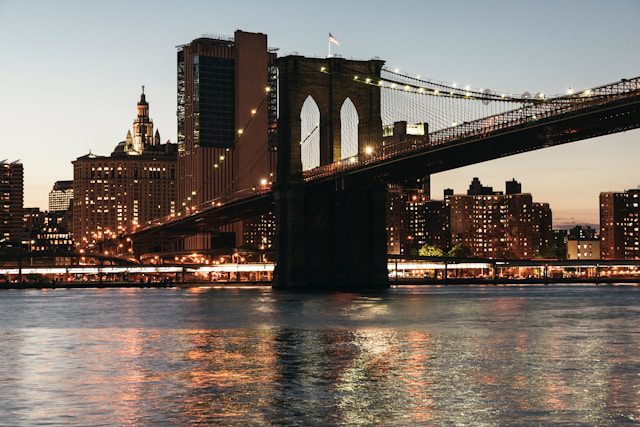
New York’s transportation system has long been one of the most complex and heavily utilized networks in the United States. From the dense urban corridors of New York City to the expansive rural highways of upstate regions, the state’s roads and bridges serve as critical arteries for commerce, daily commuting, and economic growth. But beneath this vast network lies aging infrastructure that demands urgent attention.
Recent announcements highlighting new investments in roadway and bridge restoration signal progress, but they also underscore a larger reality: New York is in the midst of a long-term effort to modernize and stabilize infrastructure that has been under strain for decades.
A System Under Pressure
New York’s infrastructure is not failing overnight, it is wearing down gradually under the weight of time, usage, and environmental stress. Roads deteriorate due to constant traffic, heavy freight movement, and extreme seasonal weather patterns. Freeze-thaw cycles, in particular, accelerate cracking and pothole formation, leading to costly and recurring maintenance challenges.
Bridges face an equally complex set of pressures. Across the state, thousands of structures require ongoing inspection, repair, or replacement. In fact, New York has more than 17,000 highway bridges, with local governments responsible for over half of them, placing a significant financial and operational burden on municipalities.
The scale of the issue is substantial. Estimates suggest that billions of dollars are needed to bring aging bridges and roadways up to modern standards. Deferred maintenance only compounds the problem, turning relatively minor repairs into large-scale reconstruction projects that cost significantly more over time.
Investment Signals a Shift Toward Action
Recent infrastructure initiatives indicate that New York is beginning to address these challenges with renewed urgency. One example includes a series of highway and bridge projects across upstate regions, representing more than $30 million in targeted investment. These efforts focus on replacing aging bridges, resurfacing worn roadways, and improving overall travel safety.
While these projects may appear modest in scale compared to the state’s total infrastructure needs, they reflect a broader strategy: prioritize high-impact improvements that enhance safety and extend the lifespan of existing assets.
At a larger scale, New York has already demonstrated the capacity for significant infrastructure investment. In 2024 alone, more than 2,800 lane miles of highways were improved and over 3,100 bridges were rehabilitated or replaced, representing billions in funding dedicated to modernization.
These efforts suggest that the state is not only reacting to deterioration but also attempting to build a more resilient and sustainable transportation network.
The Hidden Cost of Inaction
Failing to maintain infrastructure carries consequences that extend far beyond inconvenience. For residents and businesses, deteriorating roads translate into higher vehicle maintenance costs, increased fuel consumption, and longer travel times.
Congestion caused by poor road conditions can ripple through the economy, affecting supply chains, delivery schedules, and workforce productivity. For individuals, these issues manifest as daily frustrations, longer commutes, unexpected car repairs, and reduced reliability in travel.
Economists often refer to this as a “hidden tax.” Drivers may not see a line item labeled infrastructure failure, but they pay for it in cumulative costs over time.
From a broader perspective, infrastructure quality is closely tied to economic competitiveness. States with reliable transportation networks are better positioned to attract investment, support business growth, and maintain efficient logistics systems.
A Tale of Two Systems
New York’s infrastructure challenges are not uniform. Urban and rural regions face distinct issues that require different approaches.
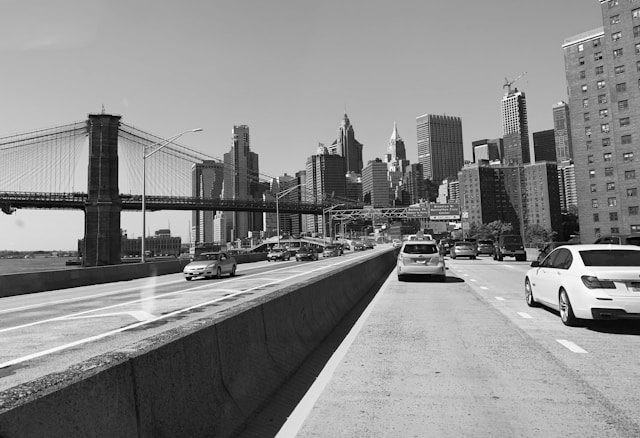
In New York City, the density of the built environment creates unique complications. Beneath the streets lies a complex web of utilities, transit systems, and aging infrastructure that makes large-scale reconstruction difficult and disruptive. Even routine road repairs must account for underground systems, traffic management, and pedestrian safety.
Additionally, the city faces an increasing backlog of bridge repairs. Hundreds of structures require attention, with some classified as structurally deficient, indicating significant deterioration in key components.
Upstate regions, by contrast, often deal with aging infrastructure spread across large geographic areas. Lower population density can make it more difficult to justify large investments, even when roads and bridges are critical for regional connectivity and economic activity.
This divide highlights the need for tailored strategies that address the specific challenges of each region while maintaining a cohesive statewide approach.
Climate and the Growing Infrastructure Challenge
Increased frequency of extreme weather events add another layer of complexity to infrastructure management, including heavy rainfall, flooding, and severe winter storms which accelerates wear and damage.
Freeze-thaw cycles, already a major contributor to road deterioration, are becoming more intense and unpredictable. At the same time, rising temperatures and changing precipitation patterns can weaken structural components over time.
Bridges are vulnerable to environmental stressors. Corrosion, water damage, and material fatigue can compromise structural integrity if not addressed proactively.
These challenges mean that infrastructure planning must now account not only for current conditions but also for future climate scenarios. Investments in improved drainage systems, stronger materials, and adaptive designs are becoming increasingly important.
Technology and Modernization
While much of the focus is on physical repairs, technology is playing an increasingly important role in how New York manages its infrastructure.
Advanced inspection systems allow engineers to monitor bridge conditions more accurately and identify potential issues before they become critical. Data-driven asset management systems help prioritize repairs based on risk, usage, and cost-effectiveness.
Additionally, modern construction techniques and materials are improving durability and reducing long-term maintenance needs. From high-performance concrete to smart sensors embedded in structures, these innovations are helping extend the lifespan of infrastructure assets.
Digital tools also enable better coordination between agencies, contractors, and local governments, streamlining project execution and improving efficiency.
The Funding Challenge
Despite progress, funding remains one of the most significant obstacles to large-scale infrastructure restoration.
Maintaining and upgrading thousands of miles of roads and bridges requires sustained investment over many years. While federal funding programs and state budgets provide critical support, they are often not sufficient to address the full scope of needs.
Local governments, which own a substantial portion of the state’s bridges, face additional financial constraints. Balancing infrastructure spending with other priorities, such as education, healthcare, and public safety can be difficult.
This creates a complex funding landscape where long-term planning must account for both available resources and competing demands.
A Long-Term Commitment
Restoring New York’s roadways and bridges is an ongoing process that requires consistent investment, strategic planning, and adaptive management.
The state’s recent projects demonstrate a commitment to addressing infrastructure challenges, but they also highlight the scale of the work ahead. With thousands of structures requiring attention and evolving environmental and economic pressures, the task is far from complete.
However, the importance of this effort cannot be overstated. Infrastructure is the foundation upon which economies operate and communities connect. Safe, reliable roads and bridges are essential not only for transportation but for quality of life.
Looking Ahead
The future of New York’s infrastructure will depend on its ability to balance immediate repairs with long-term resilience. This means not only fixing what is broken but also rethinking how infrastructure is designed, maintained, and funded.
As investment continues and modernization efforts expand, the goal is clear: build a transportation system that is safer, more efficient, and capable of supporting the state’s needs for decades to come.
New York’s roads and bridges have carried generations of progress. Restoring them is not just about maintenance – it is about ensuring that the state remains connected, competitive, and prepared for the future.
