

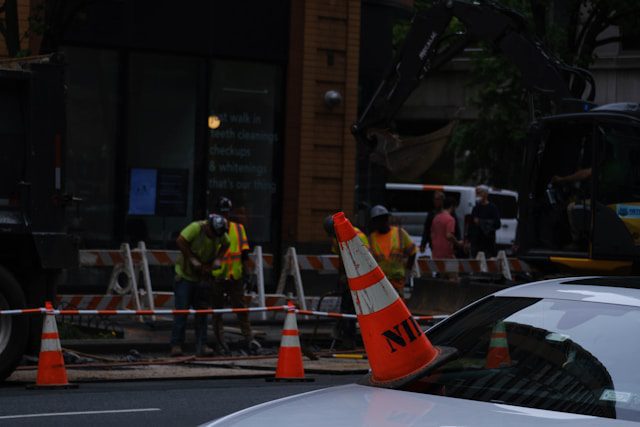
BINGHAMTON, N.Y. — A temporary street closure in downtown Binghamton is drawing attention not just for the inconvenience it brings to drivers, but for what it represents: a broader wave of reinvestment taking shape across New York State.
This week, a section of Water Street, one of the city’s key downtown corridors has been shut down to accommodate construction activity tied to a major renovation project at a long-standing retail anchor. Crews are using heavy equipment, including cranes, to install new rooftop systems as part of a larger overhaul aimed at modernizing the aging structure.
While the closure is temporary, its impact is immediate. Traffic has been rerouted, access points have shifted, and both commuters and local businesses are adjusting to the disruption. For many residents, it’s a familiar tradeoff: short-term inconvenience in exchange for long-term economic stability.
A Local Disruption with Statewide Implications
At first glance, a blocked-off stretch of road might seem like a routine construction update. But in the context of New York’s broader infrastructure and economic strategy, it tells a more significant story.
The renovation project behind the closure is part of a multi-million-dollar effort supported by a combination of state, county, and local funding. The goal is not simply to upgrade a building, it is to preserve a major retail presence in the heart of Binghamton’s downtown.
That distinction matters.
Across New York, particularly in upstate cities, maintaining economic anchors has become a priority. These are the businesses that drive foot traffic, support surrounding shops and restaurants, and contribute to the tax base. When they remain stable, downtown areas are more likely to remain viable. When they leave, the effects can be immediate and difficult to reverse.
Local officials have been clear about the stakes. Losing a large commercial tenant in a historic downtown building could mean years of vacancy, significant redevelopment costs, and a ripple effect across nearby businesses.
Infrastructure Investment as Economic Strategy
The Binghamton project aligns with a broader trend across New York: using infrastructure investment as a tool for economic preservation and growth.
In recent years, the state has committed substantial funding toward roads, bridges, and public infrastructure. One example is a record-setting paving initiative that will cover thousands of miles of roadway, reflecting an effort to modernize transportation networks while supporting business activity statewide.
But infrastructure is no longer limited to highways and bridges. Increasingly, it includes:
- Upgrading aging commercial buildings
- Improving pedestrian access and parking connectivity
- Supporting mixed-use development in urban centers
In Binghamton, these priorities are visible in the integration of a new parking facility with adjacent retail space, designed to improve accessibility and encourage more consistent foot traffic downtown.
Growth vs. Disruption
For residents and business owners, the immediate concern is navigating the present.
Street closures, construction noise, and shifting traffic patterns can create real challenges. Delivery schedules are affected. Parking becomes more complicated. Customer flow can temporarily decline.
At the same time, these disruptions often signal that investment is taking place, something many communities have spent years trying to attract.
This creates a balancing act that cities across New York are increasingly facing:
- How to maintain accessibility during construction
- How to communicate clearly with the public
- How to minimize impact while still moving projects forward efficiently
In Binghamton, pedestrian access to affected businesses has been maintained despite the closure, a small but important detail that reflects this balancing effort.

A Broader Shift in Upstate New York
The situation unfolding in Binghamton is not unique. Similar patterns are emerging in cities across upstate New York, where economic revitalization efforts are focusing on:
- Retaining legacy businesses
- Repurposing historic buildings
- Improving infrastructure to attract new investment
These efforts are often supported by a mix of public funding and private participation, reflecting a collaborative approach to redevelopment.
What makes Binghamton notable is the scale of the project relative to the city’s size. A multi-million-dollar investment tied to a single downtown property underscores how critical individual assets can be in smaller urban economies.
Why Retail Anchors Still Matter
In an era dominated by e-commerce and shifting consumer behavior, the role of large retail stores in downtown areas has been widely debated. Yet in many parts of New York, these businesses continue to serve as essential economic drivers.
They provide:
- Employment opportunities
- Consistent foot traffic
- A reason for people to visit and stay in downtown areas
Without them, smaller businesses often struggle to sustain customer flow.
This reality has led policymakers to rethink how they approach retail. Rather than viewing it as a declining sector, there is increasing recognition that strategic investment can extend its viability, particularly when combined with improvements to infrastructure and accessibility.
What This Means for New York
The temporary closure of a downtown street in Binghamton may seem like a localized issue, but it reflects a much larger shift in how New York is approaching economic development.
The state is moving toward a model that prioritizes:
- Preservation of existing assets
- Strategic upgrades rather than complete replacement
- Integration of infrastructure with economic planning
This approach acknowledges a simple but important truth: revitalization does not always come from building something new. Sometimes, it comes from reinvesting in what already exists.
What Construction Signals for Binghamton’s Future
For now, drivers in downtown Binghamton will continue to navigate detours and delays as construction progresses. But beyond the inconvenience, the project represents a broader commitment to maintaining the economic fabric of New York’s smaller cities.
It is a reminder that growth is not always seamless. It often comes with disruption, adjustment, and short-term challenges. But in many cases, those challenges are part of a longer-term effort to ensure that communities remain active, connected, and economically viable.
In that sense, a closed street is more than a traffic issue, it is a visible sign of change.
