

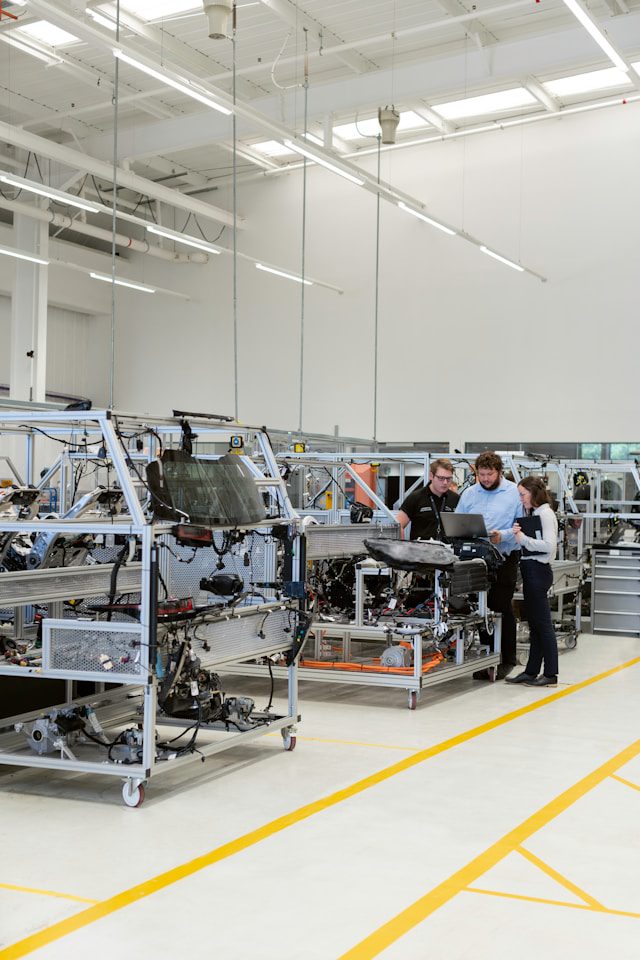
Upstate New York is undergoing one of the most significant industrial transformations in its modern history. Once synonymous with heavy industry, rail corridors, and manufacturing giants that defined America’s 20th-century economic ascent, the region is now reemerging as a hub for advanced manufacturing, semiconductor production, clean energy technology, and research-driven innovation. In 2026, the convergence of federal industrial policy, private capital investment, and academic collaboration has positioned Upstate New York as a strategic center in the national push for domestic production and technological resilience.
The stakes are high. With global supply chains increasingly subject to geopolitical strain and economic volatility, the United States has turned its focus toward reshoring critical industries, particularly semiconductors, advanced materials, and clean energy manufacturing. Upstate New York has become a central beneficiary of that pivot. Billions of dollars in capital investment are flowing into communities such as Syracuse, Albany, Buffalo, and Rochester, reshaping labor markets, real estate development, and infrastructure planning.
Yet growth is not guaranteed. Labor shortages, infrastructure capacity constraints, regulatory hurdles, and global competition all pose material risks. Understanding the interplay between manufacturing and technology in Upstate New York is essential for business leaders, policymakers, investors, and residents navigating this new industrial chapter.
A Resurgence in Multiple Industries
Manufacturing in Upstate New York historically centered on steel, automotive components, textiles, and machinery. Cities like Buffalo, Rochester, and Syracuse once thrived on production lines that supplied national and global markets. However, deindustrialization in the late 20th century led to significant job losses and economic contraction.
Today’s manufacturing ecosystem is fundamentally different. It is characterized by:
- Advanced manufacturing: Highly automated, precision-based production integrating robotics, AI, and digital monitoring systems.
- Semiconductor fabrication: Chip manufacturing critical to defense, automotive, and consumer electronics.
- Clean energy technology: Battery storage, hydrogen research, and renewable component production.
- Life sciences and optics: Leveraging research institutions for medical devices and imaging technologies.
Upstate New York’s resurgence is tied to its deep research infrastructure, anchored by institutions such as the University at Albany’s College of Nanotechnology, Science, and Engineering (CNSE) and the Rochester Institute of Technology (RIT). These institutions serve as innovation pipelines feeding into private-sector investment.
Semiconductor Manufacturing as a Strategic Anchor
The semiconductor sector represents the most visible symbol of the region’s transformation. The 2022 federal CHIPS and Science Act accelerated domestic chip manufacturing incentives, and Upstate New York emerged as a prime location for expansion.
In Malta, New York, GlobalFoundries operates one of the nation’s most advanced semiconductor fabrication plants. The company has invested billions into expanding its Fab 8 facility, producing chips for automotive, aerospace, and communications sectors.
In Central New York, Micron Technology announced plans for a massive semiconductor manufacturing campus near Syracuse, projected to unfold over two decades with investments potentially exceeding $100 billion. The project is expected to generate thousands of direct and indirect jobs, catalyzing workforce development initiatives across Onondaga County.
Semiconductor manufacturing requires not only capital but highly skilled labor, advanced utilities infrastructure, and long-term policy stability, factors that Upstate New York is actively strengthening.

Advanced Manufacturing and Automation
Advanced manufacturing integrates digital systems, robotics, AI-based quality control, and precision engineering. In Rochester, optics and photonics firms, building on the legacy of companies like Eastman Kodak, have transitioned into high-tech imaging and defense applications.
The region’s photonics cluster received national attention through federal funding initiatives, reinforcing Rochester’s role as a center for laser and optics innovation. Automation-heavy production facilities in the Albany Capital Region are now increasingly data-driven, enabling predictive maintenance and real-time process optimization.
These shifts enhance productivity but also reshape labor demands, favoring technicians, engineers, and data analysts over traditional assembly roles.
Clean Energy and Battery Innovation
Clean energy manufacturing is expanding across the region. The Plug Power hydrogen facility in Western New York represents the state’s commitment to green hydrogen production. Battery research and production initiatives tied to electric vehicle supply chains are drawing interest from global firms seeking proximity to Northeast consumer markets.
The integration of renewable energy infrastructure with manufacturing operations is becoming a competitive differentiator. Facilities designed with sustainability metrics in mind may qualify for additional federal and state incentives, reducing long-term operational costs.
Key Trends and Performance Metrics
Quantitative indicators highlight the scale of transformation underway.
Capital Investment Surge
Since 2022, Upstate New York has attracted tens of billions of dollars in announced private-sector investment. Semiconductor expansions alone account for a substantial portion of that figure. According to state-level economic development reports, manufacturing job growth in key counties has outpaced national averages in certain advanced sectors.
Large-scale capital commitments also drive secondary investments in housing, utilities, transportation, and educational infrastructure.
Workforce Development Expansion
Community colleges and research universities are expanding technical training programs aligned with semiconductor fabrication and advanced robotics. Apprenticeship programs, public-private partnerships, and federal workforce grants are increasing.
However, workforce supply remains tight. Labor participation rates and demographic shifts present long-term planning challenges, especially in rural counties.

Regional Differentiation
- Capital Region (Albany): Nanotechnology and semiconductor R&D leadership.
- Central New York (Syracuse): Large-scale semiconductor fabrication growth.
- Western New York (Buffalo): Clean energy and hydrogen initiatives.
- Finger Lakes (Rochester): Optics, imaging, and photonics specialization.
Each region leverages distinct assets, reducing internal competition while strengthening overall state positioning.
Drivers and Influences
Multiple structural forces are shaping the trajectory of manufacturing and tech in Upstate New York.
Federal Industrial Policy
The CHIPS and Science Act and Inflation Reduction Act have fundamentally altered the competitive landscape for U.S. manufacturing and technology, particularly in semiconductor fabrication, advanced materials, and clean energy production. These landmark pieces of legislation provide federal subsidies, tax incentives, and targeted grants designed to incentivize domestic production, reduce reliance on foreign supply chains, and stimulate regional economic development. By lowering the effective cost of investment and offering long-term financial support, these policies have made it more viable for companies to undertake large-scale, capital-intensive projects in the United States rather than offshore.
Upstate New York’s readiness to capitalize on these policies is notable. The region already possesses extensive industrial infrastructure, including underutilized manufacturing facilities that can be retrofitted for advanced production. Complementing this are research institutions such as the University at Albany’s College of Nanotechnology, Rochester Institute of Technology, and Syracuse University, which provide a steady pipeline of highly trained engineers, technicians, and scientists. This talent pool supports the R&D necessary to develop next-generation semiconductors, renewable energy technologies, and high-tech manufacturing processes.
Moreover, Upstate New York benefits from abundant and cost-effective energy resources, including hydroelectric power from the Niagara River and access to regional grid capacity capable of supporting high-consumption operations. Combined with logistical advantages, proximity to major Northeast markets, established transportation corridors, and port access, these factors make the region an attractive location for companies seeking to expand domestic manufacturing under these Acts.
These federal initiatives have catalyzed a new industrial renaissance in Upstate New York, positioning it as a national hub for high-tech manufacturing, semiconductor innovation, and clean energy development. By aligning federal policy incentives with existing regional strengths, the state is not only attracting large-scale investments but also creating a fertile ecosystem for startups, supplier networks, and workforce development programs that will sustain long-term economic growth.
Academic-Industry Collaboration
The University at Albany’s nanotechnology programs and Rochester’s robust engineering ecosystem serve as critical engines for innovation and commercialization in Upstate New York. Through specialized research centers, cutting-edge laboratories, and industry-aligned curricula, these institutions consistently generate patents, prototypes, and spin-off ventures that feed directly into the regional economy. Collaboration between academia and private firms accelerates innovation cycles by allowing research to move rapidly from theoretical models to practical applications, whether in semiconductors, photonics, clean energy technologies, or advanced materials manufacturing.
These partnerships also strengthen talent retention. By providing students and researchers with direct access to high-profile industrial projects, internships, and startup incubators, the region offers compelling career pathways that reduce the historic “brain drain” of graduates migrating to coastal tech hubs. Companies benefit from a steady influx of highly trained professionals familiar with local industrial infrastructure, while universities gain practical insights to inform research priorities.
Additionally, these collaborations foster entrepreneurial ecosystems that extend beyond individual firms. Innovation hubs, co-working labs, and technology incubators in Albany, Rochester, and Syracuse create networks where startups, established companies, and academic researchers can exchange ideas, share resources, and accelerate commercialization. This dynamic synergy positions Upstate New York not only as a center for technical talent but also as a self-reinforcing innovation corridor, where new technologies, skilled professionals, and investment opportunities continuously reinforce each other.
Strategic Location and Infrastructure
Proximity to major markets such as New York City, Boston, Toronto, and Montreal provides Upstate New York firms with significant logistical and distribution advantages, reducing shipping times, lowering transportation costs, and facilitating rapid delivery to key commercial centers. This geographic positioning also enables closer engagement with multinational clients, regional supply chains, and collaborative industry partners.
In addition, access to abundant freshwater from the Great Lakes and reliable hydroelectric power provides a critical competitive edge for high-energy industrial operations, including semiconductor fabrication, battery production, and large-scale manufacturing plants. Stable, cost-effective energy and water resources reduce operational constraints and support sustainable, energy-intensive production processes.
Future infrastructure investments, including highway expansions, rail corridor upgrades, broadband connectivity, and smart-grid modernization, will further enhance the region’s attractiveness for large-scale industrial projects. Advanced transportation and digital infrastructure not only improve supply chain efficiency but also enable real-time logistics, predictive maintenance, and automated distribution networks. Together, these factors create a strategic, long-term advantage, positioning Upstate New York as a hub for domestic manufacturing, research-driven innovation, and energy-intensive industrial operations.
Risks and Challenges
Despite promising growth, vulnerabilities remain.
Workforce Shortages
Advanced semiconductor fabrication requires highly specialized talent. While training programs are expanding, demographic trends, including aging populations in certain counties, may limit labor supply.
Mitigation strategies include relocation incentives, national recruitment campaigns, and expanded STEM education at earlier grade levels.

Infrastructure Strain
Large fabrication plants consume significant water and electricity. Upgrades to grid capacity and municipal systems require coordinated planning and public investment.
Delays in infrastructure readiness could hinder production timelines or increase operational costs.
Global Market Volatility
Semiconductor demand is cyclical. Global downturns or oversupply could reduce profitability, impacting regional economic stability.
Additionally, geopolitical tensions affecting raw material supply chains, particularly rare earth elements, pose strategic risks.
Opportunities and Areas for Growth
The convergence of policy, capital, and innovation presents numerous avenues for expansion.
Supply Chain Localization
As anchor firms expand, secondary suppliers, materials producers, equipment manufacturers, logistics providers are likely to co-locate. This clustering effect multiplies job creation and strengthens regional resilience.
Economic modeling suggests that each semiconductor fabrication job may generate multiple indirect jobs across construction, maintenance, and services.
Clean Energy Integration
Facilities powered by renewable energy may achieve both cost savings and ESG alignment. Investment in grid modernization and hydrogen infrastructure positions Western and Central New York for leadership in decarbonized manufacturing.
Public-private energy partnerships could further enhance competitiveness.
Innovation Commercialization
Research universities continue to generate patents and startups. Encouraging venture capital formation within the region could help retain emerging firms that might otherwise relocate.
Business incubators and state-backed innovation funds may accelerate commercialization pipelines.
Strategic Takeaways and Recommendations
For businesses, investors, and policymakers:
- Prioritize workforce pipelines: Invest in technical education and apprenticeship expansion.
- Modernize infrastructure: Ensure water, energy, and transport capacity aligns with projected growth.
- Diversify sector exposure: Balance semiconductor concentration with growth in photonics, clean energy, and life sciences.
- Strengthen supply chain ecosystems: Encourage co-location of suppliers.
- Maintain policy stability: Long-term commitments attract long-horizon capital.
The integration of manufacturing and technology in Upstate New York is a generational restructuring.
Balancing Growth and Risk
Upstate New York stands at a pivotal industrial crossroads. Advanced manufacturing and technology investment have reignited economic momentum in communities once defined by decline. Semiconductor fabrication, clean energy innovation, and research commercialization are reshaping regional identity.
However, sustained success requires disciplined execution. Workforce development must keep pace with capital expansion. Infrastructure planning must anticipate scale. Policymakers must maintain competitive incentive frameworks without compromising fiscal sustainability.
If managed effectively, Upstate New York could solidify its position as one of America’s most important advanced manufacturing corridors, blending industrial legacy with technological future.
The coming decade will determine whether this resurgence becomes a durable economic renaissance or a cyclical surge. For stakeholders across the public and private sectors, the imperative is clear: align strategy, invest wisely, and build resilience alongside growth.
