

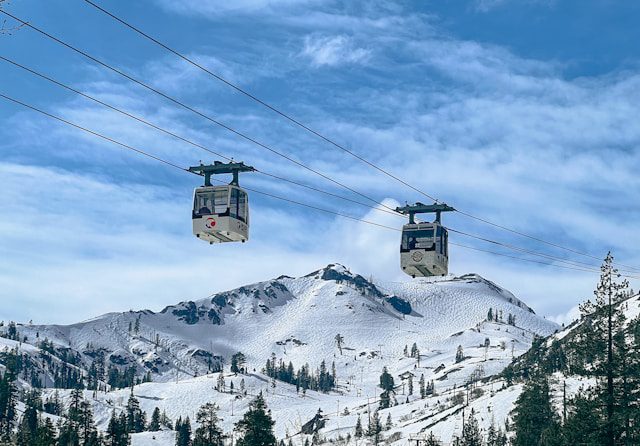
A technical malfunction at Gore Mountain ski resort in North Creek, New York left dozens of visitors stranded in mid-air on Wednesday, prompting an extended rescue operation by trained staff and state responders. The incident, which took place on the resort’s Northwoods Gondola, captivated the attention of skiers and emergency personnel alike but ultimately ended without injury.
Mid-Morning Shutdown and Immediate Response
Shortly after the gondola began operating around 9 a.m. on February 4, 2026, a mechanical issue caused the lift system to halt unexpectedly. Reports indicate that approximately 67 skiers were left suspended across about 20 cabins, trapped as high as 70 feet (21 meters) above the snow-covered terrain.
The shutdown was triggered not by a power outage but by safety systems responding to a component misalignment in the gondola mechanism. That automatic stoppage is designed to prevent more serious failures, but it also meant that the cabins could not continue to their scheduled stops.
Coordinated Rescue Operation
Once it became clear the gondola could not resume normal operation, rescue efforts began in earnest. Staff from Gore Mountain’s ski patrol joined forces with New York State Police, Department of Environmental Conservation (DEC) forest rangers, and other emergency workers to execute a complex evacuation.
Rescuers climbed support towers and used ropes, harnesses, and pulley systems to lower each person safely to the ground. In some cases, skiers had to be guided through challenging terrain before reaching secure footing. The entire process took about five hours, with the last participants brought down by mid-afternoon.
Officials and participants alike praised the operation’s precision and professionalism. The complex effort reflected extensive planning and prior preparation, including evacuation drills conducted before the season began.
Passenger Experiences During the Ordeal
While temperatures hovered below freezing, enclosed gondola cabins provided some protection from the elements, and many passengers reported staying warm thanks to sunlight and insulated doors. Some skiers spoke of anxiety and uncertainty while waiting to be rescued, noting concerns such as needing bathroom breaks or the mental strain of being suspended high above the ground for hours.
One skier described the experience as “sobering,” saying that the event would stay with them for years. Such firsthand accounts underscore how everyday recreational activities can suddenly shift into intense moments of vulnerability, even when robust safety systems are in place.
Safety and Future Operations
Representatives of the Olympic Regional Development Authority (ORDA), which manages Gore Mountain, emphasized that safety protocols functioned as intended and that there were no reported injuries. The gondola system was inspected thoroughly following the evacuation, and service reopened the following day after evaluations and adjustments were completed.
The resort has indicated that the mechanical issue is under review and that future operations will proceed only after all safety considerations are assured. This incident highlights the importance of preventive maintenance, system redundancies, and coordinated emergency readiness in complex mechanical environments, especially those involving public recreation under demanding conditions.
Broader Implications for Mountain Operations
Although rare, gondola evacuations like the one at Gore Mountain raise broader questions about infrastructure resilience and public expectations for safety. Mountain rescue operations rely heavily on well-trained staff, inter-agency cooperation, and preparation for worst-case scenarios. The absence of injuries despite prolonged suspension in cold weather suggests that planning and training significantly mitigate potential harm.
However, the incident also underscores lingering uncertainties. Details about the precise mechanical fault and any planned upgrades or preventative measures have not been fully disclosed. Without transparent post-incident analysis, there remains limited understanding of why the alignment problem occurred and how similar disruptions will be prevented in future seasons.
Reflections from the Slopes
For skiers and visitors, the rescue served as a vivid reminder of both the unpredictability of mountain environments and the value of preparedness. In addition to testing physical readiness, such events can shift perceptions of risk and personal responsibility, prompting visitors to be more thoughtful about unexpected delays or challenges while enjoying outdoor activities.
In the end, the incident at Gore Mountain stands as a testament to effective emergency response and collaborative action. While technical failures can happen, the coordination between resort operators and state agencies ensured that every individual was lowered safely, turning a potentially hazardous situation into an example of professionalism and preparedness at work.
